
For councils, combined authorities and their energy, estates and climate teams across the UK
Decarbonising a council estate isn't 200 projects. It's one programme.
Upload the half-hourly readings for every metered building you run. In a few minutes you'll see schools, leisure centres, offices, libraries and depots ranked side by side: where the waste is, which buildings have room for heat pumps, and which would use the most solar.
Free, with no sign-up. Your data stays on your computer. Not sure where to find it? Here's how.
Step 1: upload your estate's HH data
An Excel or CSV file for each meter, ideally 12 months. All the common supplier and bureau layouts work.
Analyse my estateWeighing up how to deliver it? Read about long-term energy partnerships.
From meter data to a programme you can fund and deliver
Most councils already have half-hourly data for their larger buildings: suppliers and energy bureaux record it for billing. It's the evidence behind almost every decarbonisation decision, so the journey starts there.
Upload
Drag in one file per meter for every building. The analyser checks the readings, flags gaps and clock changes, and builds each building's year.
Rank
Set each building's type (school, leisure centre, office, library, depot) and see base load, out-of-hours use and unusual days, priced at your rates and ranked across the estate.
Check headroom
Compare each supply's peaks with its agreed capacity, and test the load from a heat pump or EV chargers before anyone designs one.
Size solar
Measure how much of a solar system's output each building would use, then map roofs and car parks in the solar calculator.
Programme
Download estate and building reports for your climate action plan, a capital bid, a funding application or a market engagement exercise.
What a year of data showed at one leisure centre
We ran a year of readings from a made-up council leisure centre with a 25 metre pool through the analyser. It found pool hall plant that had stopped setting back at night, a hard limit on heat pump size, and a building that would use every unit of a well-sized solar system.
Why councils find this hard
Climate emergency dates are close, the main grant scheme has closed, and the estate is hundreds of buildings of every age and type. Read the full picture.
Targets set in 2019
Most councils declared a climate emergency and many set net zero dates for their own operations of 2030 or soon after. Council net zero targets.
The grant scheme has closed
The Public Sector Decarbonisation Scheme is delivering projects already awarded, with no future funding. Great British Energy, the National Wealth Fund and partnerships fill some of the gap. Funding routes.
Hundreds of buildings
Schools, pools, offices, libraries, depots and street lights each need a different answer. Picking them off one grant at a time is slow and costly. Building types.
The grid connection
Heat pumps add winter load. Headroom on each supply decides what is possible, and when. Supply capacity and headroom.
Heat networks are coming
Heat network zoning will designate areas of English towns and cities where buildings may be required to connect. Council buildings will often be the anchor loads. Heat networks and zoning.
Delivery capacity
Few councils have the in-house team to design, procure and deliver at the pace their targets need. That's why long-term partnerships are back on the table. Energy partnerships.
Treat the estate as one programme, with one partner
A growing number of councils have stopped running decarbonisation as a list of separate projects. They bundle buildings into a pipeline, bring in long-term private finance and delivery capacity through a partnership, and keep control through clear governance and shared targets.
- One pipeline: every building assessed and prioritised from measured data
- Blended money: grants where they exist, borrowing and partner finance for the rest
- Long-term delivery: a partner contracted for years, not one project
- Local value: social value, jobs and community energy written into the contract

Built for local government information governance
The analyser does all its work inside your web browser. Meter files are read on your own computer and are never sent to us or anyone else. There is no personal data involved, no account and no tracking.
Nothing uploaded
No server is involved in the analysis. Once the page has loaded, you can disconnect from the internet and carry on working.
No account
No sign-up, no email address needed to analyse, and no tracking cookies.
You keep the results
Reports, spreadsheets and project files are saved to your computer. Save a project to come back to it later.
Council energy, property and climate teams
Built for the people who have to turn a climate action plan into buildings that actually change: energy managers, corporate property and estates teams, climate and sustainability officers, capital programme teams and finance. In district, county, unitary and metropolitan councils, and in combined authorities.
- Schools: waste in holidays and at weekends, and solar that fits term time
- Leisure centres and pools: the biggest single energy users on most estates
- Civic offices: half-empty buildings still lit and heated as if full
- Libraries and community buildings: many small sites, one way to rank them
- Depots and fleet: capacity for electric vehicles

Guides
Plain answers to the questions council teams ask, each sourced and dated.
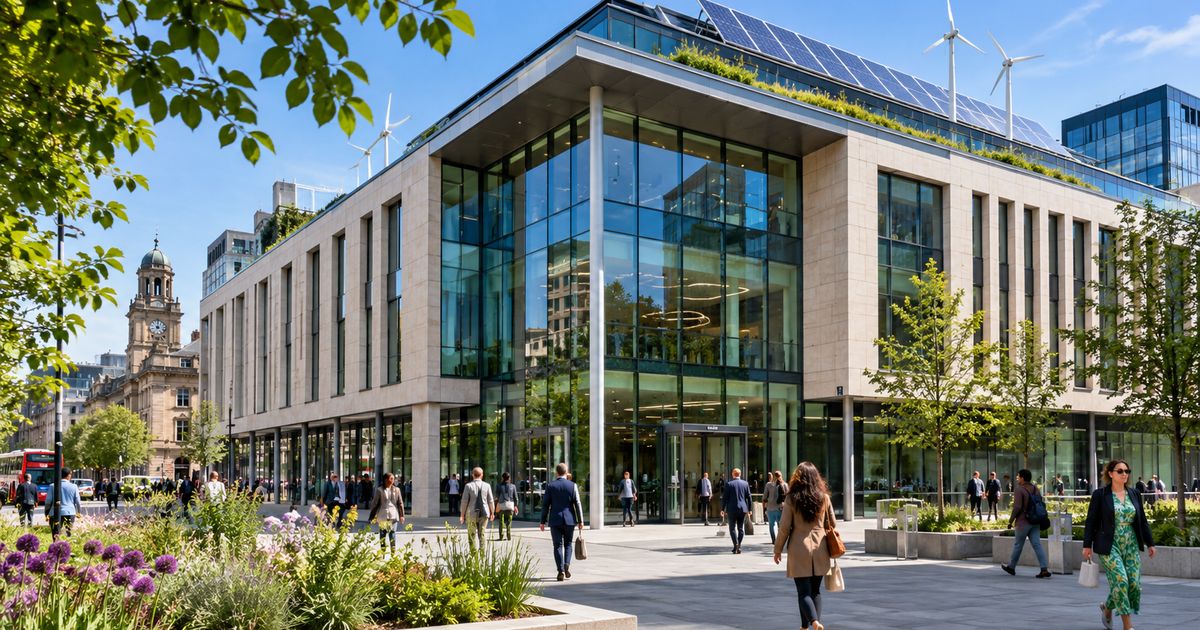
The council estate challenge
Targets, funding, buildings, heat and delivery capacity in one place, and where to start.
Read the guide
Long-term energy partnerships
How councils bundle an estate into one programme with a private partner.
Read the guide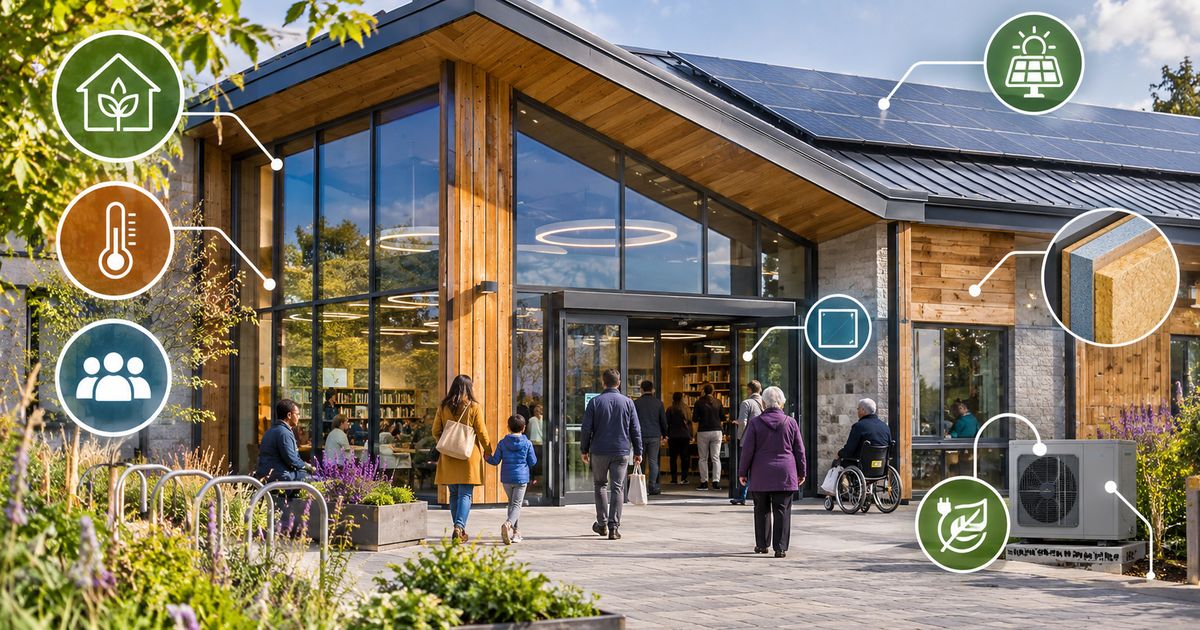
Funding routes
What replaced the Public Sector Decarbonisation Scheme, and what to do now.
Read the guideDecarbonisation
Solar
Want help turning results into a programme?
We help councils prioritise the estate, build the business case, find the funding and choose the right delivery model, from a single framework call-off to a long-term partnership.