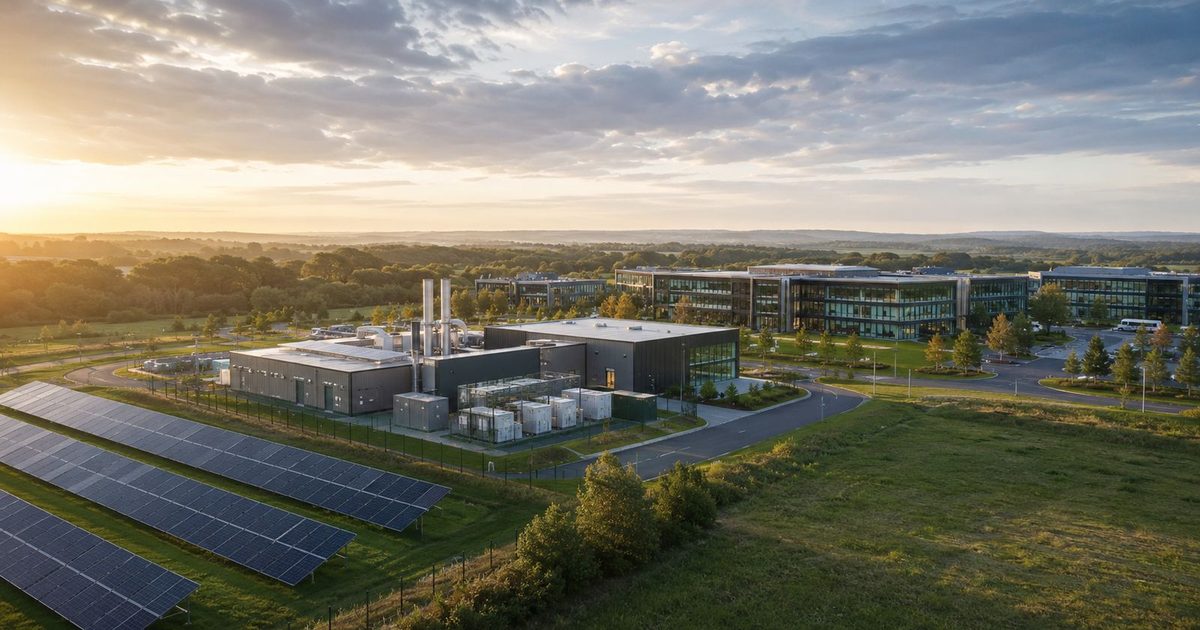
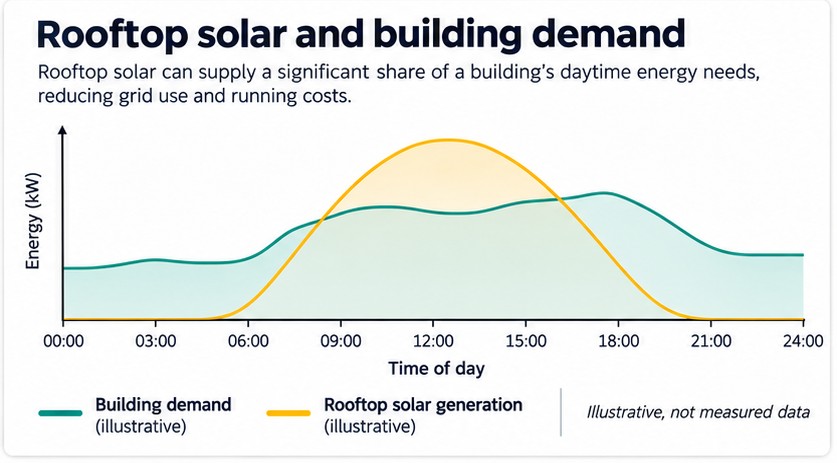
Solar pays back fastest where the building uses most of its own output during the day. Leisure centres, depots and civic offices usually use far more of it than schools, which are empty for much of the summer. Size each system from the building's measured half-hourly demand, not from roof area alone.
How building types compare
| Building | Daytime demand | Typical fit |
|---|---|---|
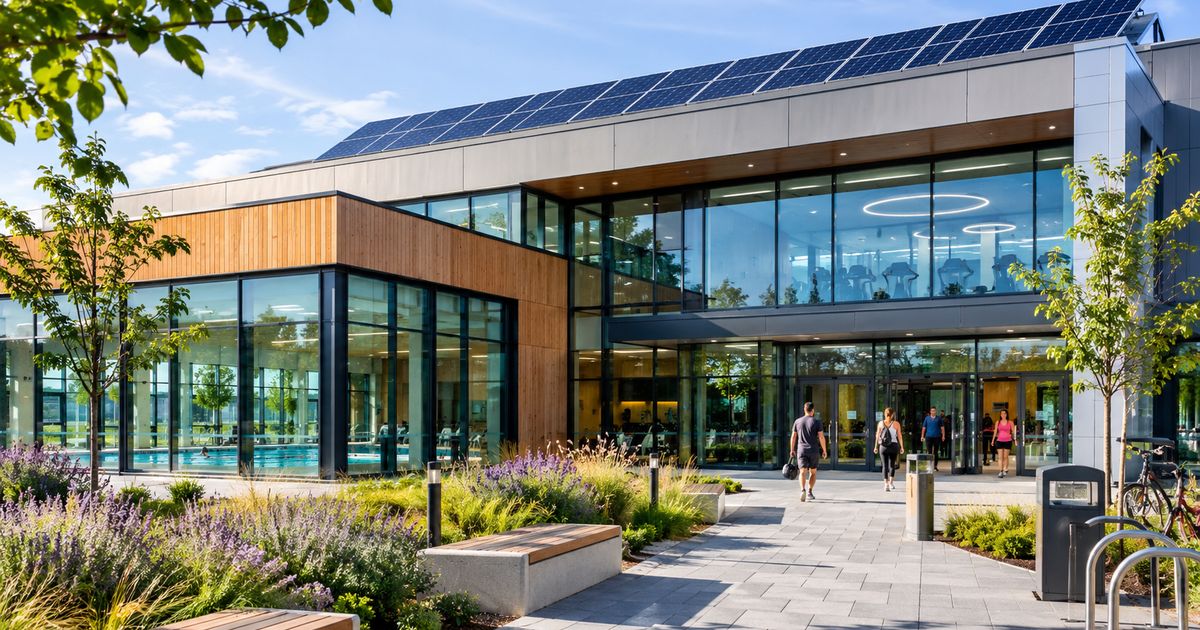
| Leisure centre with pool | High all year, day and night | Very good: little output exported |
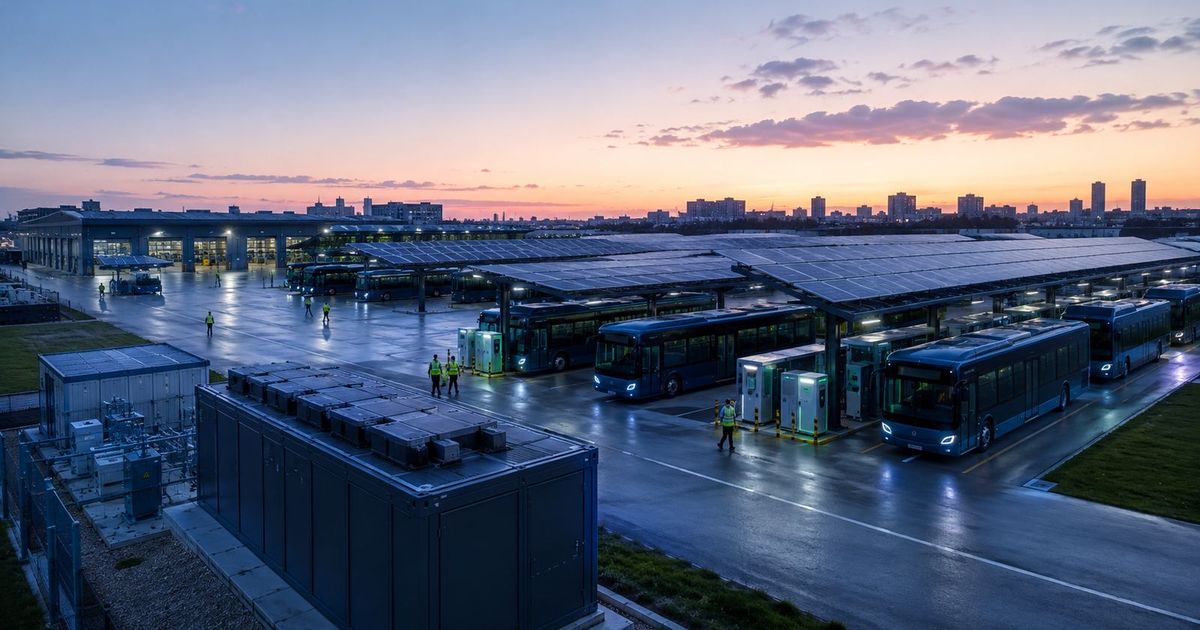
| Depot | High on weekdays; EV charging adds more | Good, better with batteries or vehicle charging |
| Civic offices | Weekday daytime | Good on weekdays; weekend output exported |
| Library or community centre | Moderate, opening hours only | Size modestly |
| School | Term-time daytime; low in summer holidays | Size carefully: the sunniest weeks are the emptiest |
The analyser measures, building by building, how much of a solar system's output each site would use, and passes the figure to the solar calculator.
Paying for it
Great British Energy has funded solar on schools and NHS sites,1 and mayoral authorities have shared £10 million for solar, batteries and EV chargers on community buildings.2 Phase II of the Swimming Pool Support Fund paid for solar on many council pools.3 Without grant, solar on high-use buildings often pays back from savings, or can be funded through a power purchase agreement. See paying for solar.
Common pitfalls
- Roof condition. Don't put a 25-year system on a roof with ten years left. Survey first.
- Grid connection. Larger systems need network operator approval. See planning and grid connection.
- Leased buildings. Leisure centres run by an operator and academies may not be the council's to decide on. Agree who benefits from the savings.
- Oversizing schools. A system sized to the roof can export most of its summer output.
Sources
Checked 28 November 2026.
Questions people ask
Which council buildings are best for solar?
Buildings that use most of the output during the day: leisure centres with pools, depots and civic offices. Schools need careful sizing because they are empty during the sunniest weeks.
How should councils size solar?
From each building's measured half-hourly demand, so the system is sized to what the building will use rather than to the roof area.