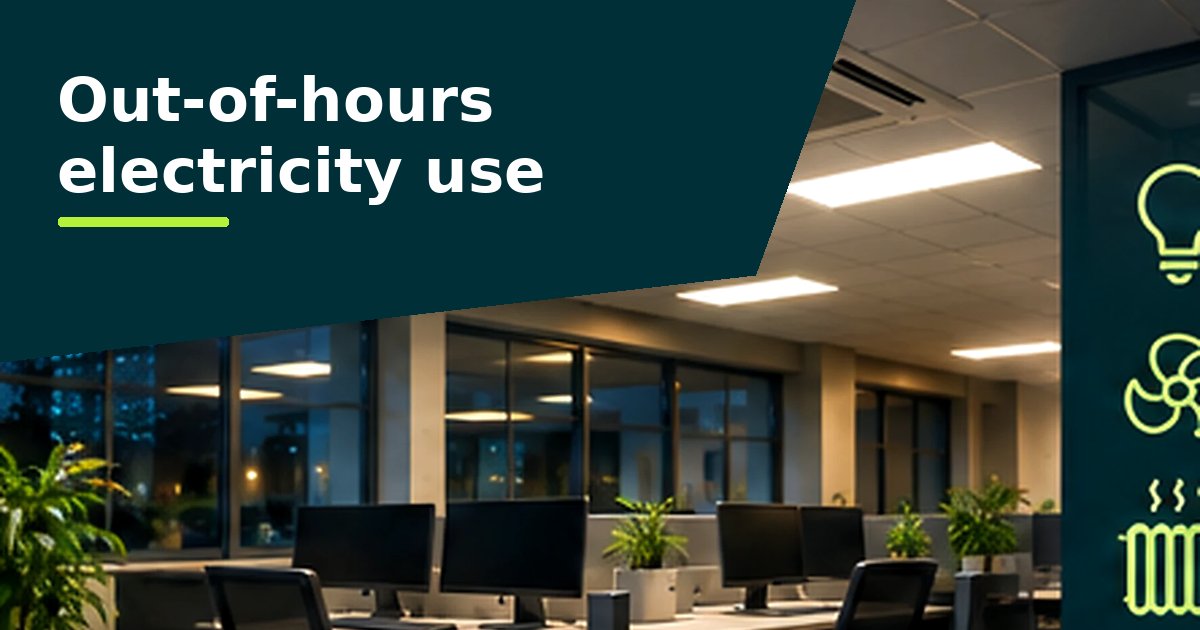
Civic offices typically waste most while empty: evenings, weekends and quiet hybrid working days. Plant still runs to a five-day timetable, and server rooms and chillers run around the clock. Fix controls and timetables first, then size heat pumps and solar to the smaller load that's left.
What to look for in the data
- Weekday pattern. If Monday and Friday look like Wednesday, plant isn't following occupancy.
- Weekend load. Anything above base load at weekends is worth a walk round.
- Base load. Server rooms, comms cupboards and always-on cooling are often the biggest part. Moving servers to the cloud or a data centre can cut it sharply.
Rationalising the estate
Many councils are consolidating offices. Data helps decide which building to keep: the one with lower base load, more headroom and better roof for solar is cheaper to decarbonise.
Heat
Civic offices are often anchor loads for heat networks. Check whether yours is in a likely zone before replacing boilers. See heat networks and zoning.
Questions people ask
How can councils cut office energy use with hybrid working?
Match heating, ventilation and lighting timetables to the days and floors actually used, close floors on quiet days, and tackle always-on loads such as server rooms.