For councils that own homes, housing is usually far bigger than the corporate estate in carbon and cost. It's funded through the Housing Revenue Account and national housing schemes rather than corporate budgets, so it's often planned separately. Linking the two pays off: heat networks can serve both, solar and procurement can be shared, and one partner can deliver across both.
How it differs
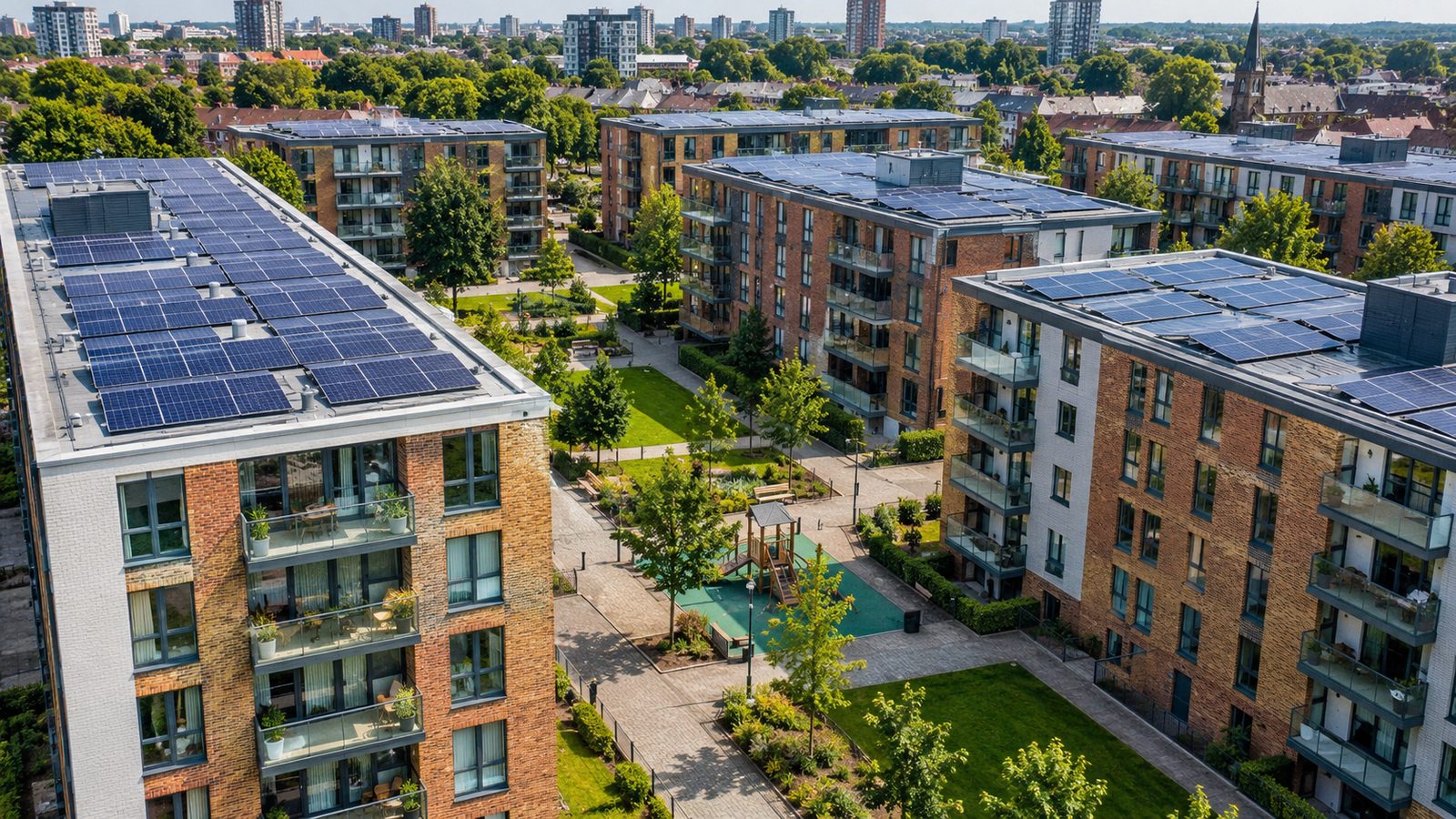
- Funding: through the Housing Revenue Account and national schemes. Government published its Warm Homes Plan in January 2026, alongside heat network zoning.1 Check current schemes before planning.
- Residents: works happen in people's homes, so engagement, access and disruption shape the programme.
- Data: homes are on domestic meters, not half-hourly business meters, so this site's analyser covers the corporate estate, communal areas and housing offices rather than individual homes.
Where it links with the corporate estate
- Heat networks: estates of flats can share a network with civic buildings and schools.
- Communal supplies: blocks' landlord supplies, lifts and lighting are often on business meters, which the analyser can read.
- Procurement: one partner or framework can cover housing and corporate buildings, with joint social value.
Sources
Checked 28 November 2026.
Questions people ask
Can the analyser be used for council homes?
Not for individual homes, which are on domestic meters. It can read communal and landlord supplies, housing offices and other business-metered sites.